
Yıldız Technical University, usually shortened to YTU or simply Yıldız, is one of the oldest and best known engineering schools in Turkey. It is a public university in Istanbul, and for international students it offers something many people look for: a respected technical degree in a big city at a fraction of what private universities charge. It is also very competitive, so it pays to understand how admission works before you apply.
This guide covers what YTU is known for, its campuses, the programmes worth looking at, how international admission works, what you can expect to pay and how to plan your application for the 2027 intake.
• Type: public (state) university, founded in 1911
• Location: Istanbul, European side, with campuses in Beşiktaş and Esenler (Davutpaşa)
• Best known for: engineering, architecture and applied sciences
• QS World University Rankings 2027: joint 634th
• Teaching languages: Turkish and English, depending on the programme
• International admission: based on international exam results and your high school record, through YTU’s own yearly application call
Why international students choose Yıldız Technical University
Most students who pick YTU do it for three reasons. The first is reputation. Yıldız has trained engineers and architects for more than a century, and Turkish employers in construction, manufacturing, energy and technology know the name well. A YTU diploma carries weight in the local job market in a way that many newer universities cannot match.
The second reason is cost. As a state university, YTU charges international students far less than private universities in Istanbul. If you compare it with private options such as Bahçeşehir University or İstinye University, the difference over four years can easily reach tens of thousands of dollars. Our guide to private vs state universities in Turkey explains the trade-offs in more detail.
The third reason is ranking momentum. YTU has climbed steadily in the QS World University Rankings, from the 1001–1200 band a few years ago to joint 634th in the 2027 edition. That puts it among the leading Turkish universities in global tables. For a wider comparison, see our article on Turkish universities in the world rankings.
Campuses and student life
YTU has two campuses on the European side of Istanbul. The historic Yıldız campus sits in Beşiktaş, close to the Bosphorus, in buildings that once belonged to the Yıldız Palace grounds. The much larger Davutpaşa campus in Esenler is where most faculties, laboratories, libraries and sports facilities are located today, and it is where the majority of students spend their days.
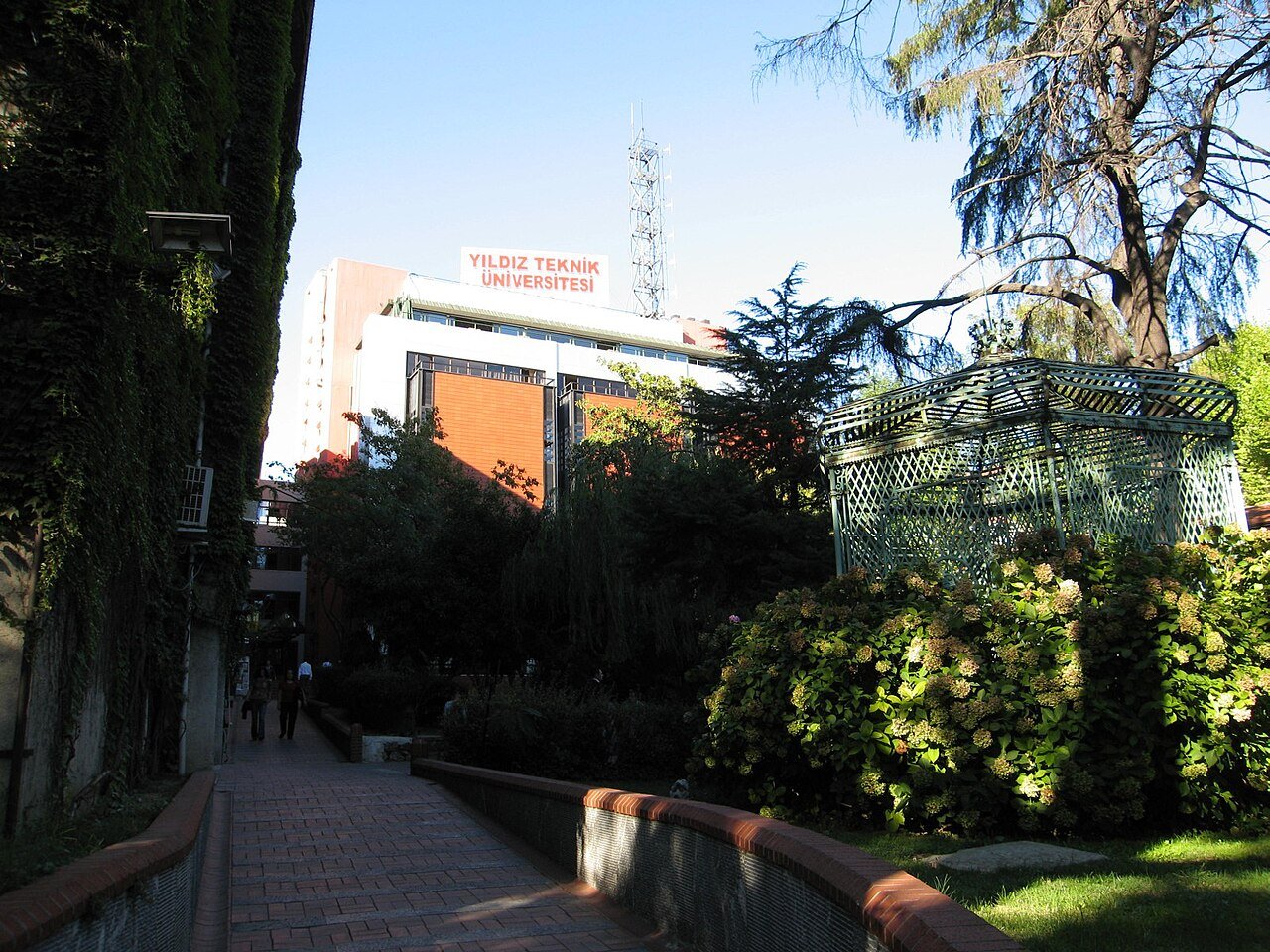
Davutpaşa is a proper campus with green spaces, cafeterias, student clubs and dormitories nearby. It is further from the city centre than Beşiktaş, so many students choose to live in Esenler, Bayrampaşa or Zeytinburnu to keep commuting short, while others live closer to the centre and use the metro and Marmaray. Our guide to studying in Istanbul covers neighbourhoods, transport and the real monthly budget.
The university runs a Turkish teaching centre (TÖMER) on campus, which is useful if you plan to take a Turkish-taught programme or simply want to settle in faster. Erasmus exchanges with European partner universities are also available once you are enrolled.
Faculties and programmes worth knowing
YTU is organised into eleven faculties, including Civil Engineering, Mechanical Engineering, Electrical and Electronics, Chemistry and Metallurgy, Naval Architecture and Maritime, Architecture, Art and Design, Applied Sciences, Economics and Administrative Sciences, Arts and Sciences, and Education. YTU does not have a medical faculty, so students interested in medicine or dentistry should look at our guide to the best medical universities in Turkey instead.
The programmes that attract the most international interest are:
- Civil Engineering: one of the strongest and most traditional departments, closely linked to Turkey’s construction sector
- Computer Engineering and Electrical and Electronics Engineering: high demand and high entry scores
- Mechanical, Industrial, Chemical and Metallurgical and Materials Engineering: solid options with good laboratory facilities
- Architecture and City Planning: well regarded, with a strong design studio culture
- Biomedical Engineering and Bioengineering: newer fields that bridge engineering and health
- Business Administration and Economics: for students who want a non-technical degree at a technical university
If engineering is your goal but you are still comparing universities, read how to study engineering in Turkey for an overview of the main options.
Turkish or English: languages of instruction
Many YTU programmes are taught in Turkish, while a selection, mostly in engineering, economics and business, are offered fully or partly in English. The medium of instruction is set programme by programme and published in YTU’s yearly list of programmes for international students, so always check the exact language of the department you want before applying.
For English-taught programmes you will need an accepted English test score, or you will take the English preparatory year first. For Turkish-taught programmes the university normally expects a Turkish proficiency certificate, and students without one usually spend a year at a Turkish language centre before starting. A preparatory year adds time and cost, so factor it into your plan from the beginning.
How international admission works at YTU
State universities in Turkey admit international students outside the national YKS exam that Turkish citizens take. Each university publishes its own call for international students every year, with its quotas, accepted exams, minimum scores and deadlines. YTU is no exception, and its call is the document that decides everything.
In practice, YTU evaluates international applicants on the basis of internationally recognised exam results, such as the SAT, together with your high school diploma and grades. The list of accepted exams and the minimum scores can change from year to year, so do not rely on old forum posts. Our guide to SAT scores for Turkish universities explains how these thresholds usually work, and studying in Turkey without YÖS covers universities that admit students on other criteria.
The process usually looks like this:
- Read YTU’s international admission announcement for the 2027 intake as soon as it is published
- Choose your programmes and check their language of instruction and quotas
- Prepare your documents: passport, high school diploma and transcript with translations, exam score report, language certificate if you have one, and a photo
- Apply online within the application window and rank your programme choices
- Wait for the placement results, then pay the tuition fee and complete registration by the stated deadline
- Apply for your student visa, then for a residence permit after arrival
Because the competition for popular engineering programmes is intense, apply to more than one university. A sensible list mixes YTU with one or two other state universities and a private university that offers a scholarship. For the general calendar, see Turkish university application deadlines, and for a step-by-step walkthrough, how to apply to Turkish universities.
Tuition fees and living costs
YTU sets tuition fees for international students each academic year and publishes them on its international office website under fees and funding. As at other state universities, fees are modest compared with private universities, and English-taught programmes usually cost more than Turkish-taught ones. The latest official list available at the time of writing is for an earlier academic year, so confirm the 2027 figures on YTU’s website before you budget.
| Cost item | What to expect at YTU |
|---|---|
| Tuition | State university level, set yearly by YTU, higher for English-taught programmes |
| Preparatory year | English prep at YTU, or Turkish at a language centre if you lack a certificate |
| Accommodation | State dormitories (KYK) are the cheapest, private dorms and shared flats cost more |
| Health insurance | Required for your residence permit, see student health insurance in Turkey |
| Living costs | Food, transport and phone, which depend heavily on where you live in Istanbul |
Rent is the biggest variable. Istanbul has become much more expensive in recent years, and a room near Davutpaşa costs a lot less than a flat in Beşiktaş or Kadıköy. Many students share flats in pairs or groups of three to keep costs down.
Scholarships at Yıldız
YTU does not run large tuition scholarships for international undergraduates the way private universities do. The main route to a funded place at YTU is the Türkiye Scholarships programme run by the Turkish government, where you can list YTU among your preferred universities. It covers tuition, accommodation, a monthly stipend and a Turkish language year. Read our guide to fully funded scholarships in Turkey to see how it works and when applications open.
Is YTU the right choice for you?
YTU is a strong fit if you want an engineering or architecture degree, you have good exam scores, and you are comfortable with a large state university where you are expected to be independent. It is less suitable if you need medicine or dentistry, if you want small classes and a lot of individual support, or if your scores are below the competitive range. In that case a private university with a scholarship may get you a better programme for a similar total cost. Our list of the cheapest universities in Turkey is a good place to compare.
After admission: visa and residence permit
Once you have your acceptance letter you apply for a student visa at the Turkish consulate in your country, then register at YTU and apply for a student residence permit within your first weeks in Turkey. The rules, documents and timelines are explained in our guide to the Turkey student residence permit.
Frequently asked questions
Is Yıldız Technical University good for international students?
Yes, especially for engineering and architecture. It is a well established public university with a strong reputation in Turkey and a rising position in global rankings.
Does YTU accept YÖS?
YTU decides the accepted exams in its yearly international admission call. In recent years it has based admission on international exam results such as the SAT and on high school records. Check the current call for the exact list.
Can I study at YTU in English?
Some programmes are taught fully or partly in English, mainly in engineering, economics and business. Others are in Turkish. The language is listed for each programme in YTU’s international programme list.
Does YTU have a medical school?
No. YTU focuses on engineering, architecture, sciences and related fields and does not offer medicine or dentistry.
How hard is it to get into YTU?
Popular programmes such as computer, electrical and civil engineering are very competitive. Strong exam scores and grades matter, and it is wise to apply to several universities at the same time.
Planning to apply to Yıldız?
Saya Group helps international students build a realistic university list, prepare documents, apply on time and handle the visa and residence permit after admission.
Sources: Yıldız Technical University International Relations Office, QS World University Rankings 2027