
Turkey has a quietly strong reputation in interior work. Istanbul’s hotels, restaurants and residential towers keep a large industry of interior architects, furniture makers and lighting designers busy, and the same firms take on projects across the Gulf, Central Asia and Europe. If you want to study interior design in Turkey, you will find dozens of four-year programmes, many of them in English, at fees that are moderate by European standards
The tricky part is that the field has several names and two very different levels of study. Picking the wrong one is the most common mistake we see, so this guide starts there before moving on to universities, admission, portfolios, costs and careers
Interior Design or Interior Architecture? Know the Difference
In Turkey the full bachelor degree is almost always called İç Mimarlık (Interior Architecture) or İç Mimarlık ve Çevre Tasarımı (Interior Architecture and Environmental Design). It sits in a faculty of architecture, fine arts or design, lasts four years and leads to the title of interior architect. A few universities use the English name Interior Design for an equivalent bachelor programme
Separately, vocational schools offer two-year associate programmes called İç Mekan Tasarımı, usually translated as Interior Space Design. These are practical and cheaper, but they do not give the same title or the same options for a master’s degree later. When an agent quotes a surprisingly low fee for interior design, check whether it is the two-year vocational diploma
If you are torn between the two disciplines, our guide to architecture degrees in Turkey explains how the full architecture programme differs. In short, architects design whole buildings and structures, while interior architects focus on spaces, materials, furniture, lighting and how people use a room
Where to Study Interior Design in Turkey
English-taught programmes
Most English-taught interior architecture programmes are at private (foundation) universities. Bilkent University in Ankara runs one of the best-known departments, Interior Architecture and Environmental Design, and is often the first choice for students who want a strong academic name. In Istanbul, Bahçeşehir, Kadir Has and Özyeğin universities offer English-taught options, and Izmir University of Economics is a solid choice on the Aegean coast. The list changes slightly every year, so confirm the language of instruction in each university’s current quota table
Turkish-taught programmes at state universities
State universities such as Istanbul Technical University, Mimar Sinan Fine Arts University and Hacettepe University have long-established interior architecture departments taught in Turkish. Fees are much lower, but international places are limited, admission is more competitive and you need Turkish at a high level, usually C1, after a preparatory year. For how the two sectors compare more broadly, see our breakdown of private versus state universities in Turkey
| Option | Language | Typical admission | Rough yearly fee |
|---|---|---|---|
| Private university bachelor | English or Turkish | Diploma and GPA, sometimes SAT or portfolio | Often 5,000–12,000 USD before discounts |
| State university bachelor | Mostly Turkish | YÖS or SAT, plus Turkish C1 later | Much lower, set in lira each year |
| Two-year vocational diploma | Mostly Turkish | Diploma and GPA | Lowest, but limited title |
| Master in interior architecture | English or Turkish | Bachelor, portfolio, often ALES or GRE | Varies widely by university |
As one concrete reference, Istinye University in Istanbul lists its Turkish-taught Interior Architecture and Environmental Design bachelor at 8,000 USD per year for new international students in 2026–27. English-taught programmes at better-known universities can cost more, while many private universities offer early-registration or merit discounts of 25 to 50 percent. Our overview of university tuition fees in Turkey shows how these discounts usually work
Admission Requirements for Interior Architecture
For a private university, the core file is simple. You need a high school diploma and transcript, a passport copy, and proof of English for an English-taught programme. Some universities ask for SAT or a recognised YÖS score, and fine arts faculties sometimes add a portfolio review or an interview
- High school diploma and transcript, translated and certified
- Passport copy and photo
- English proof such as IELTS, TOEFL or the university’s own proficiency exam
- A small portfolio of drawings, sketches or design work, where requested
- For state universities, an accepted exam score and later Turkish proficiency
Without an English score, you will normally start with a one-year preparatory programme. That is not a disaster, and students often say the prep year helped them settle in, but it adds a year of fees and rent. Our article on the English preparatory year at Turkish universities explains how to test out of it
What You Will Study
The first year is mostly foundations: basic design, freehand and technical drawing, colour and form. From the second year the design studio becomes the centre of your week, with projects that grow from a single room to a café, a hotel floor or a retail store. Around it you take courses in materials, construction details, lighting, furniture design, building services and the history of art and architecture
Software is taught along the way, typically AutoCAD, SketchUp, 3ds Max or Rhino, and increasingly Revit and real-time rendering tools. Expect long studio nights before juries. Most programmes also require a summer internship, often in an interior design office and sometimes on a construction site, which is where Istanbul’s huge project market helps foreign students build contacts
Not sure which interior architecture programme fits you?
Share your grades, English level and budget, and we will suggest realistic universities and help you prepare a portfolio before the 2027 deadlines
Cities and Student Life
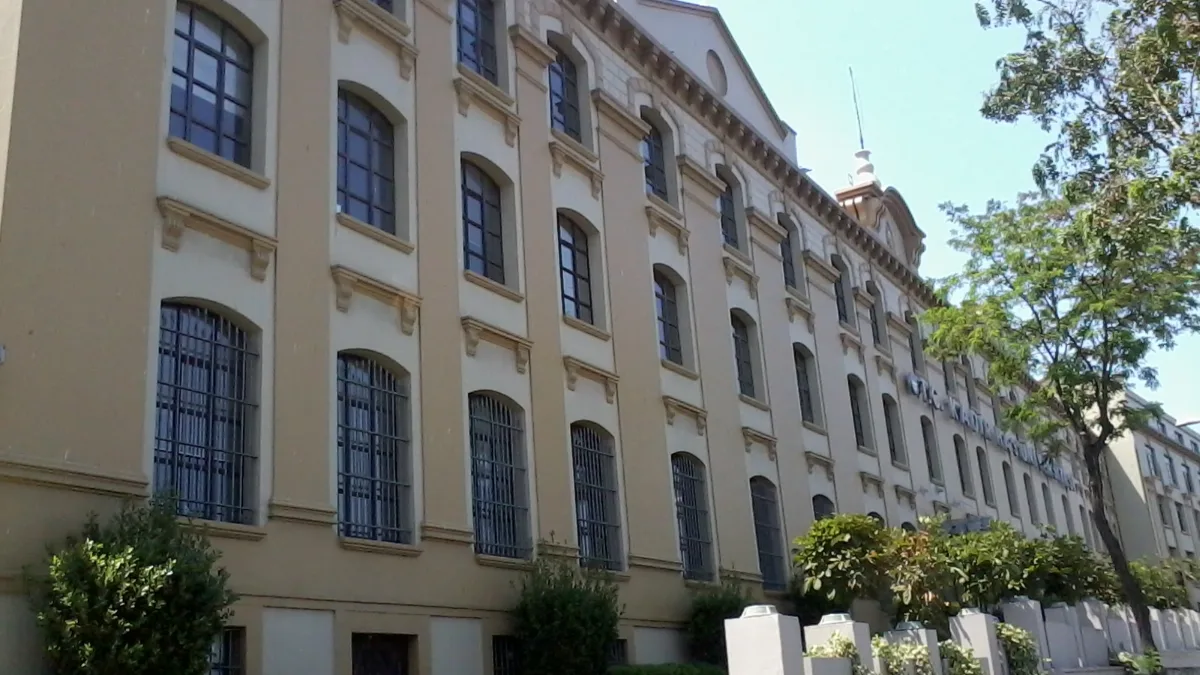
Istanbul has the largest concentration of programmes and the most design events, showrooms and offices, which matters for internships. Its cost of living is also the highest. Ankara is calmer and cheaper, with Bilkent and several other private universities, while Izmir offers a relaxed coastal lifestyle and a smaller but active design scene. In Istanbul, look at how campuses reuse old industrial buildings. Kadir Has University’s campus in Cibali, for example, is a converted 19th-century tobacco factory, and that kind of adaptive reuse often becomes a studio project
Career Prospects After Graduation
Graduates work in interior architecture offices, hospitality and retail design teams, furniture and kitchen companies, lighting firms, exhibition design and set design for television. Turkish contractors are active in the Gulf, Russia, Central Asia and Africa, and they often need designers who speak both English and another regional language, which gives many international graduates an edge
Working inside Turkey after graduation needs a work permit, and practising under the interior architect title involves registration with the professional chamber, where rules for foreign nationals are stricter. Many of our graduates therefore plan to work abroad or for Turkish firms on foreign projects. Our guide to options after graduating in Turkey covers residence and work routes in more detail
Your Next Step
Start by deciding between a four-year bachelor and a two-year diploma, then between English and Turkish teaching. After that, shortlist three to five universities, check the 2027 quota tables when they appear, and use the winter months to build a modest portfolio and book an English test. Private universities often have the best discounts for those who apply early, sometimes as early as January
Frequently Asked Questions
Can I study interior design in Turkey in English?
Yes. Several private universities, including Bilkent, Bahçeşehir, Kadir Has, Özyeğin and Izmir University of Economics, have offered English-taught interior architecture programmes. Check each university’s current quota list for the language
How long is an interior architecture degree in Turkey?
The bachelor takes four years, plus one optional preparatory year if you need to improve your English or Turkish. Vocational interior space design diplomas take two years
Do I need a portfolio to apply?
Not always. Many private universities admit on the basis of your diploma and grades alone, but some fine arts faculties and master’s programmes ask for a portfolio or interview
How much does it cost to study interior design in Turkey?
At private universities, yearly tuition often falls roughly between 5,000 and 12,000 USD before discounts. State universities are cheaper but mostly teach in Turkish
Is a Turkish interior architecture degree recognised abroad?
Degrees from YÖK-approved universities are generally recognised, though some countries add their own licensing steps for professional practice. Check the rules of the country where you plan to work