
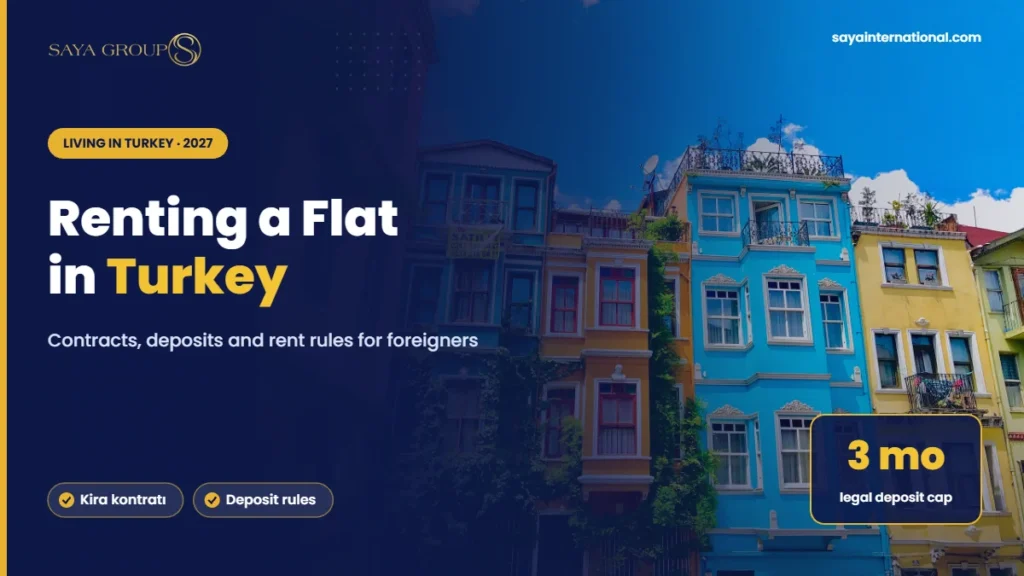

Finding a flat is usually the first real test of life in Turkey. The listings look easy, then you meet a landlord who wants a year of rent upfront, an agent asking for a fee nobody mentioned, and a contract written entirely in Turkish. Renting an apartment in Turkey as a foreigner is very doable, but it pays to know the rules before you hand over any money
We help students, families and remote workers settle in Istanbul, Ankara, Izmir and Antalya every year. This guide collects what we tell them in the first meeting, from where to search to how the deposit and rent increases legally work
Where to search for a flat
Most rentals are listed on three big portals: sahibinden.com, Hepsiemlak and Emlakjet. You can filter by district, number of rooms (written as 1+1, 2+1 and so on), furnished or unfurnished (eşyalı or eşyasız) and building age. Listings marked “sahibinden” come directly from the owner, the rest are agents
Local agents (emlakçı) still do a lot of the business, especially in older districts. Walking around a neighbourhood and stepping into two or three agency offices often finds flats that are never posted online. Facebook groups for expats exist too, though prices there are often higher
Students have extra options such as dorms and shared flats, which we cover separately in our guide to student accommodation in Turkey
Viewing a flat: what to check on the spot
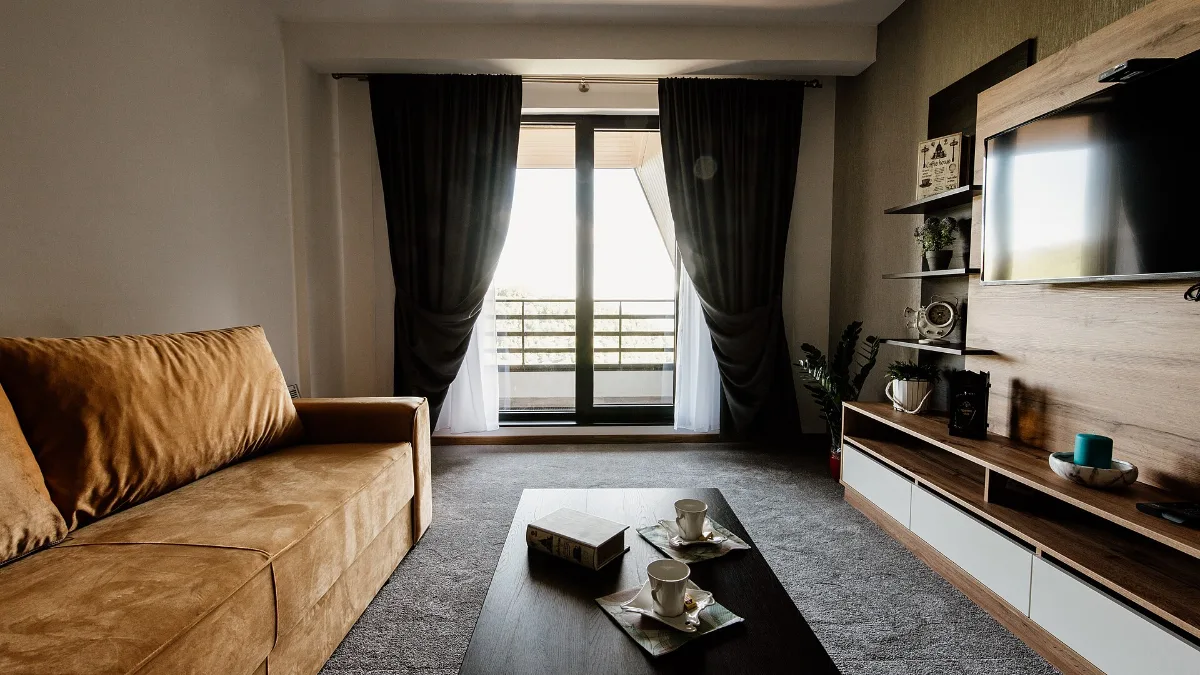
Photos on the portals are often old or taken with a wide lens, so always view in person or send someone you trust. Visit at different times of day if you can. A street that feels quiet at noon may have a busy bar below your window at midnight
- Turn on taps and the shower to check water pressure and hot water
- Look for damp or mould in corners, behind wardrobes and in bathrooms, a common issue in ground-floor and basement flats
- Ask whether heating is from a combi boiler (kombi), central heating or air conditioning, since this changes winter bills a lot
- Check mobile signal and ask which internet providers already serve the building
- Ask the monthly aidat amount and what it covers
In our experience, flats listed as “bahçe katı” (garden floor) look charming in summer and turn cold and damp in winter. Higher floors with a lift are usually a safer bet
How much rent costs in 2026
Rents rose fast after 2022 and are still climbing, though more slowly. Prices differ hugely between districts, so treat the figures below as rough ranges for an unfurnished 1+1 or 2+1 in decent condition
| City | Popular areas | Rough monthly rent |
|---|---|---|
| Istanbul | Kadıköy, Beşiktaş, Şişli, Ataşehir | Roughly $600–1,500, more on the Bosphorus |
| Ankara | Çankaya, Bahçelievler, Ümitköy | Roughly $350–800 |
| Izmir | Karşıyaka, Bornova, Alsancak | Roughly $400–900 |
| Antalya | Konyaaltı, Lara, Muratpaşa | Roughly $450–1,000, higher in summer |
On top of rent you will pay aidat (the building’s monthly service charge), utilities and internet. For a full monthly budget, see our cost of living breakdown for Turkey
The rental contract (kira kontratı)
A standard Turkish rental contract is a printed form with sections for the property, the parties, the rent, the deposit and special conditions. You can buy the template at a stationery shop, but most agents prepare their own. Ask for an English translation or bring someone who reads Turkish well
Check these points before signing
- The landlord’s name matches the title deed (tapu), or there is a valid power of attorney
- The address includes the mahalle, street, building and flat number exactly
- The rent, payment day and bank account are written clearly
- The deposit amount and conditions for return are stated
- Furniture and appliances are listed if the flat is furnished
- The contract length, usually one year, is stated
For a residence permit, the migration office generally wants a notarised contract or one registered in a way it accepts. Getting it notarised costs extra but saves arguments later. Our guide to the short-term residence permit explains what PMM checks on the address
Deposit, agency fees and rent increases
Deposit
Under the Turkish Code of Obligations, the deposit for a residential lease cannot exceed three months’ rent. One or two months is most common. Some landlords ask foreigners for several months of rent in advance on top of that. This is legal if you agree to it, but negotiate and always get receipts
Agency fee
Agents usually charge the tenant one month’s rent plus VAT. Ask about the fee before the viewing, not after you have fallen in love with the flat. A licensed agent should give you an invoice
Rent increases
For residential leases, the annual increase at renewal is limited to the 12-month average of the consumer price index (TÜFE) published by TÜİK. The temporary 25% cap that applied in 2022–2024 has ended, so the CPI rule is back. After five years, landlords can seek a court-set market rent, which can mean a sharp jump
Moving in: utilities, internet and address registration
When you get the keys, take photos of every room, the meters and any damage. Send them to the landlord by message so there is a dated record. Then set up the services
- Electricity, water and natural gas: open subscriptions in your name with the rental contract and your passport or foreigner ID number. Each provider takes a small deposit
- Internet: providers like Türk Telekom, Superonline and TurkNet need a few days to install. Fibre is common in newer buildings
- Address registration: register at the population office or via e-Devlet once you have an ID number. Your residence permit card is posted to this address
- Banking: a lease and address help when opening a bank account as a foreigner, which you will need for paying rent by transfer
Moving to Turkey and need a flat that works for your permit?
Our relocation team can shortlist areas, check neighbourhoods and review contracts before you sign anything
Earthquake safety and building checks
This is not a topic to skip. After the 2023 earthquakes, many tenants ask about building age and construction quality, and you should too. Buildings constructed after the 2000 and especially the 2018 seismic codes are generally safer. Ask the landlord for the building’s construction year and, if possible, any recent structural report
The landlord should also have compulsory earthquake insurance (DASK). It protects the building owner rather than your belongings, so consider separate home contents insurance
Common mistakes foreigners make
Paying cash with no receipt is the most expensive one. Transfer rent to the account written in the contract, and the deposit too. Another mistake is signing without seeing the title deed, which leaves you exposed to sublet scams. People also forget about aidat, which can be significant in compounds with pools and security
Leaving early is another grey area. Breaking a one-year lease often costs the deposit or a few months’ rent unless you find a replacement tenant. Read the early termination clause carefully
If you plan to stay for many years, compare renting with buying. Our guide to buying property in Turkey as a foreigner covers costs and the residence options that come with ownership
Our practical advice: decide on your district first, budget for rent plus at least three months of upfront costs, and ask us or a trusted local to read the contract before you sign
Frequently Asked Questions
Can foreigners rent an apartment in Turkey without a residence permit?
Yes. You can sign a lease with your passport. Many people rent first and then use the contract to apply for a residence permit
How much deposit is normal?
One to two months’ rent is typical. By law, the deposit for a residential lease cannot be more than three months’ rent
Can my landlord raise the rent whenever he wants?
No. Rent changes at renewal, normally once a year, and the increase is capped at the 12-month average CPI for residential leases
Do I need a notarised contract?
It is not required for the lease itself, but the migration office often asks for one when you apply for a residence permit
Is it better to rent furnished or unfurnished?
Furnished is easier for a first year. If you plan to stay longer, unfurnished flats are cheaper and give you more choice






