

Turkey sits on the border of almost every story that international relations students write essays about. Syria, the Black Sea, energy pipelines, NATO, the EU accession talks, migration routes, Central Asian trade. So it is no surprise that more applicants each year ask us how to study international relations in Turkey, and whether a degree from Ankara or Istanbul carries weight later
Our answer, after years of placing students in these departments, is that it can be an excellent choice. The best programmes are taught fully in English, fees are reasonable compared with Europe, and you spend four years in a country that is itself a case study. You do need to pick the department carefully though, because quality varies a lot between universities
Why Study International Relations in Turkey?
First, location. Ankara hosts well over a hundred embassies, the headquarters of the Turkish foreign ministry and offices of UN agencies such as UNHCR and IOM. Istanbul has consulates, international media like TRT World, regional business headquarters and a busy conference scene. For an IR student that means guest lectures, internships and events that you simply do not get in a small university town
Second, the academic tradition. The Faculty of Political Science at Ankara University, known as Mülkiye, grew out of a school founded in 1859 to train Ottoman administrators. Departments at METU, Bilkent and Boğaziçi have faculty members who publish in the major international journals and who advise governments on foreign policy. You get theory taught at a serious level, plus a lot of regional expertise on the Middle East, the Caucasus, the Balkans and Eurasia
Third, cost. Even at private universities, the total bill for four years is usually lower than one or two years at a mid-ranking university in the UK, especially once a scholarship is applied
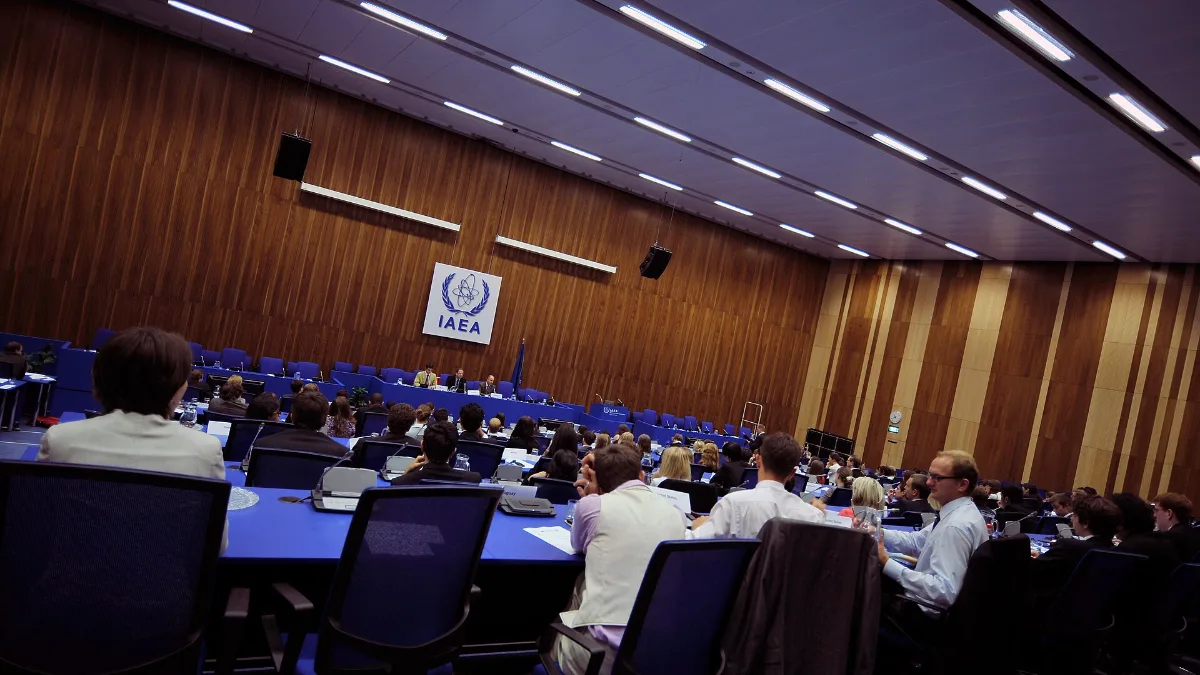
English-Taught International Relations Programmes
Unlike law, international relations is one of the easiest fields to study in English in Turkey. The state universities METU and Boğaziçi teach their political science and IR programmes in English, and they are among the most respected in the country. Private universities such as Bilkent, Koç, Kadir Has, Bahçeşehir and Istanbul Bilgi also run English-medium IR degrees, often with exchange agreements across Europe through Erasmus+
Turkish-taught programmes exist at almost every university and include strong ones like Ankara University and Marmara. If you are willing to learn Turkish, your options roughly triple. For a wider list of English options outside IR, see our roundup of the best English-taught degrees in Turkey
What about the preparatory year?
Most English-medium departments require IELTS around 6.0 to 6.5 or TOEFL iBT around 79 to 87, or their own proficiency exam. If you fall short, you join a one-year English prep programme before starting the degree. That is not a disaster, but budget for it in both time and money. Our guide to how the English preparatory year works covers the exit exam and how to skip it
Admission Requirements and Deadlines
Each university runs its own international admissions, so there is no single national form. For IR, a typical application includes
- High school diploma and transcripts, with an official translation
- SAT, YÖS, ACT or national exam results, depending on the university, with top state universities usually asking for a competitive SAT score
- English certificate or a plan to take the university’s proficiency exam
- Passport copy and photo, sometimes a personal statement explaining why you want to study IR
Application windows usually open between February and May for the autumn intake, with some private universities accepting students into the summer. METU and Boğaziçi tend to have the earliest and strictest deadlines. Private universities often decide within one or two weeks, which helps if you need time for the student visa and residence permit afterwards
Fees and Scholarships for IR Students
Tuition for international students changes every year, so use these as broad ranges and confirm on each university’s fee page before you apply
| Type of programme | Approximate annual tuition | What to expect |
|---|---|---|
| State university, Turkish-taught | Roughly USD 500 – 2,500 | Large classes, strong theory, Turkish required |
| State university, English-taught (e.g. METU) | Roughly USD 1,500 – 4,000 | Very competitive admission, excellent reputation |
| Private university, English-taught | Roughly USD 6,000 – 16,000 before discounts | Smaller classes, more exchanges, scholarships of 25% to 100% |
| Master’s in IR (English) | Roughly USD 2,000 – 10,000 in total | Thesis and non-thesis tracks, 1.5 to 2 years |
Government funding is also realistic for strong applicants. The Türkiye Bursları scholarship funds IR and political science at both bachelor’s and master’s level and covers tuition, a monthly stipend, accommodation and a Turkish language year. Competition is tough, and the application usually closes in late February, so prepare early
Want a shortlist of IR programmes that match your grades?
Our advisers compare English-taught international relations degrees, check your scholarship chances and handle the application paperwork with you for the 2027 intake
What You Actually Study
The first year is broad: introduction to political science, IR theory, world history, economics and often a sociology or law course. From the second year you move into foreign policy analysis, international political economy, international law and security studies. In the last two years you choose electives such as Turkish foreign policy, EU politics, Middle East politics, energy security, migration studies or Russian and Eurasian politics
Many departments also offer a minor, and we often suggest economics, a regional language or law. Students who combine IR with Arabic, Russian or Chinese have a clear advantage when looking for jobs later. If your interest leans towards treaties and courts, have a look at what it takes to study law in Turkey instead, or plan an international law master’s after your IR degree
Careers After an International Relations Degree
Turkish diplomatic service jobs are reserved for citizens, so foreign graduates rarely join that track. The paths we actually see are
- Returning home to join the foreign ministry or civil service, where a Turkish IR degree and regional knowledge are respected
- Research roles in think tanks and policy institutes in Ankara and Istanbul
- Programme and field roles in NGOs and international organisations, particularly in migration and humanitarian work
- Trade, logistics and export companies that need people who understand regional politics and languages
- Journalism and media work, especially with Istanbul-based international channels
Internships are where the degree really starts paying off. Ask each department during the application stage which embassies, NGOs or research centres their students intern with. A department that can answer with names is usually a department that takes careers seriously
Ankara or Istanbul for IR?
Ankara is the capital, calmer and cheaper, with embassies, ministries and METU and Bilkent close by. Istanbul is bigger, more international and more expensive, with Boğaziçi, Koç and many private universities. Students who want policy and diplomacy usually lean towards Ankara, and our guide to student life in Ankara explains why. Students interested in business, media or NGOs often prefer Istanbul
A practical next step is to write down three things: your exam score or GPA, your English level and your maximum annual budget. With those three numbers we can usually tell you within a day which IR programmes are realistic and which ones would be a stretch
Frequently Asked Questions
Can I study international relations in Turkey in English?
Yes. METU, Boğaziçi, Bilkent, Koç and many private universities in Istanbul and Ankara teach IR fully in English, usually with a preparatory year option if your score is below the requirement
How long does an IR degree in Turkey take?
The bachelor’s degree takes four years. Add one year if you need the English or Turkish preparatory programme. A master’s usually takes between one and a half and two years
Is a Turkish IR degree recognised abroad?
Degrees from YÖK-accredited universities are generally recognised, and many graduates continue to master’s programmes in Europe and North America. Always check the specific rules of the country where you plan to work
Can I work in Turkey after studying international relations?
Yes, but not in the Turkish diplomatic service. Graduates find roles in NGOs, think tanks, international companies and media, and they need a work permit arranged by the employer
Are there scholarships for international relations in Turkey?
Yes. Türkiye Bursları covers IR, and most private universities offer merit discounts of 25% to 100% based on grades and exam scores






