

Study immigration to China runs as a sequence, not a single application. The visa category you request depends on how long your program lasts. That choice then decides whether you convert to a residence permit, qualify for a government scholarship, or later move into work authorization. Funding source matters for the paperwork you gather, but it is program length that the embassy checks first.
What you need to watch depends on where you are in that sequence:
- A prospective student has to get the program dates right before the embassy appointment
- A scholarship applicant has to check an age ceiling and academic prerequisites set by the host university
- A graduate weighing work in China has to factor in which city, and which employer, can waive the usual experience requirement
Choosing between the X1 and X2 student visa
Program length decides the category. A government-sponsored student enrolled in a six-week summer course needs the same X2 visa as a self-funded student doing a short exchange, because both are in China for less than six months. Anyone admitted to a degree program or a course lasting longer than six months needs the X1 visa, regardless of whether a scholarship covers the tuition.
That distinction shapes what happens after you land. X1 holders must convert their visa into a residence permit for study once they arrive, since the X1 itself is only a short entry document. X2 holders finish their stay on the visa they were issued abroad and normally never need to visit the local Exit-Entry Bureau for that purpose.
| Feature | X1 visa | X2 visa |
|---|---|---|
| Program length | Over six months | Six months or less |
| Entry window | Valid for entry, then requires conversion after arrival | Valid for the full length of the stay as issued |
| Conversion requirement | Must convert to a residence permit for study after entry | No conversion needed in most cases |
| Typical applicant | Degree-seeking student, long-term language program, scholarship recipient | Short exchange student, summer course, short-term training program |
The embassy checks your admission letter against program length when assigning a category. An applicant admitted to a one-year language course but mistakenly issued, or mistakenly requesting, an X2 visa will find the entry stamp does not match the actual enrollment period.
Chinese border and immigration staff work from the visa category stamped in the passport, so correcting a mismatch usually means resubmitting documents before departure. Confirming the exact program length with the university before the embassy appointment avoids that delay and ensures the right category, and the right follow-up steps, from the start.
Gathering documents and applying at the embassy
The paperwork splits by funding source. Government-sponsored applicants use the JW201 form, issued through the Chinese authority or institution granting the scholarship. Self-supported applicants use the JW202 form, issued by the enrolling university. Submitting the wrong one delays processing, since the embassy cross-checks the form against the enrollment record it names.
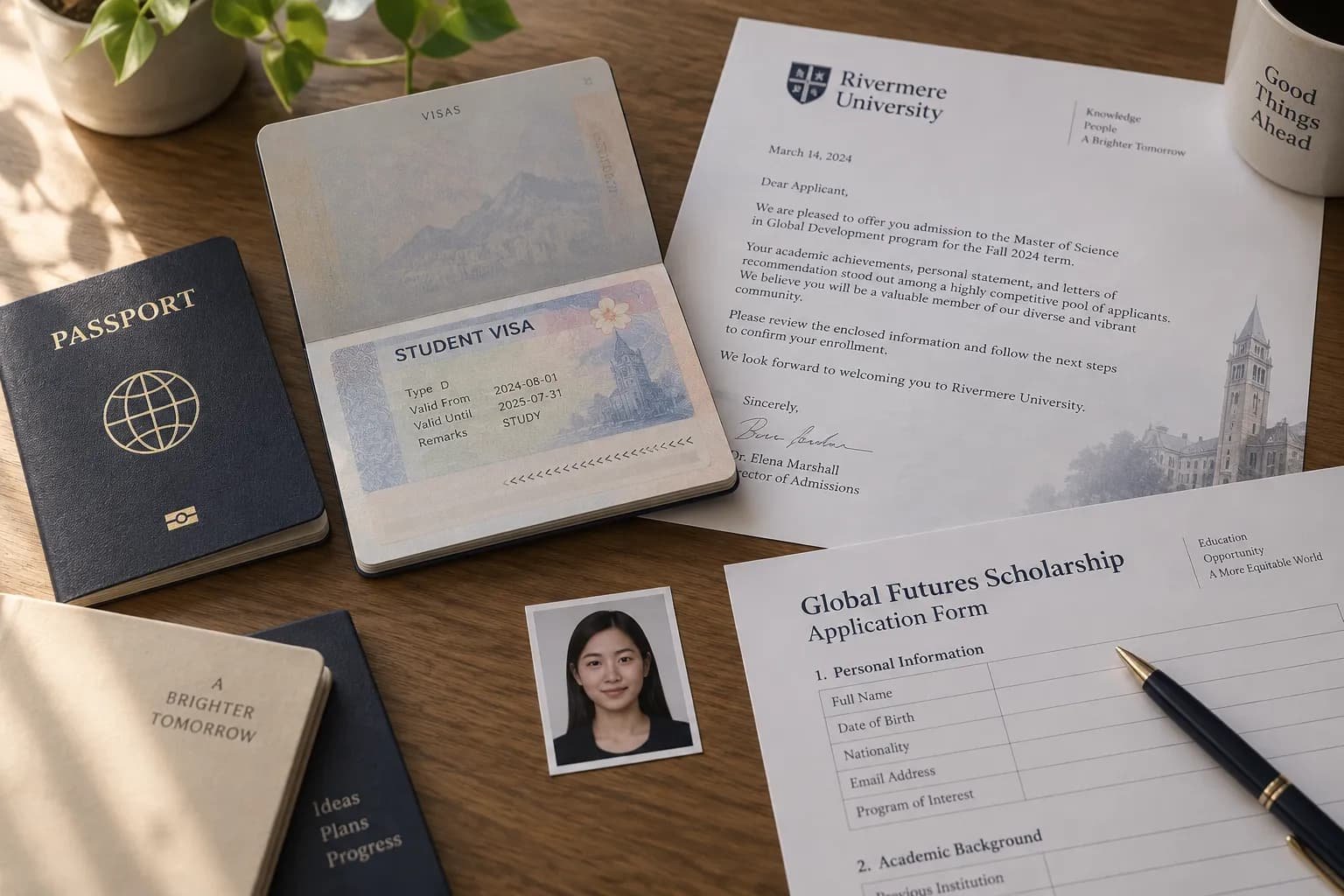
Beyond the JW form, the core documents are consistent across applicants, with one addition for internship-linked study. Every applicant needs a university enrollment or admission letter naming the program and its duration, along with the JW201 or JW202 form matching their funding category. Two further items apply depending on circumstance:
- Passport valid well beyond the intended stay, since a passport nearing expiry can be grounds for refusal
- Invitation letter, required only where the study program is tied to an internship placement
Passport validity rules are stated as a minimum, but applying close to that minimum leaves no margin if the embassy requests a correction or additional document. Applying well ahead of the stated deadline matters for the same reason. Embassy processing times are not instant, and a rejected or incomplete submission needs time to be refiled before travel dates close in.
Every applicant must appear in person at the embassy for fingerprint collection and a facial scan, regardless of age group, with one exception on each end. Applicants under 14 and those over 70 are exempt from this biometric step. Everyone else should expect it as a fixed part of the visa appointment.
This in-person requirement is one reason the embassy stage cannot be completed entirely by mail or through an agent, even when the rest of the documentation is in order. Scheduling the appointment early also leaves room to correct a mismatched form or a missing invitation letter before the deadline becomes a problem.
Not sure which university or scholarship fits you?
Get a free assessment of your admission and scholarship chances from Saya Group advisors in Istanbul.
Book a free consultationConverting your X1 visa into a residence permit
An X1 visa only grants entry. It is valid for a stay of thirty days from the date stamped in the passport on arrival. Within that window, the holder must convert it into a residence permit for study at the local Exit-Entry Bureau. The visa itself does not get extended or renewed; conversion is the only path forward for anyone staying on a long-term program.
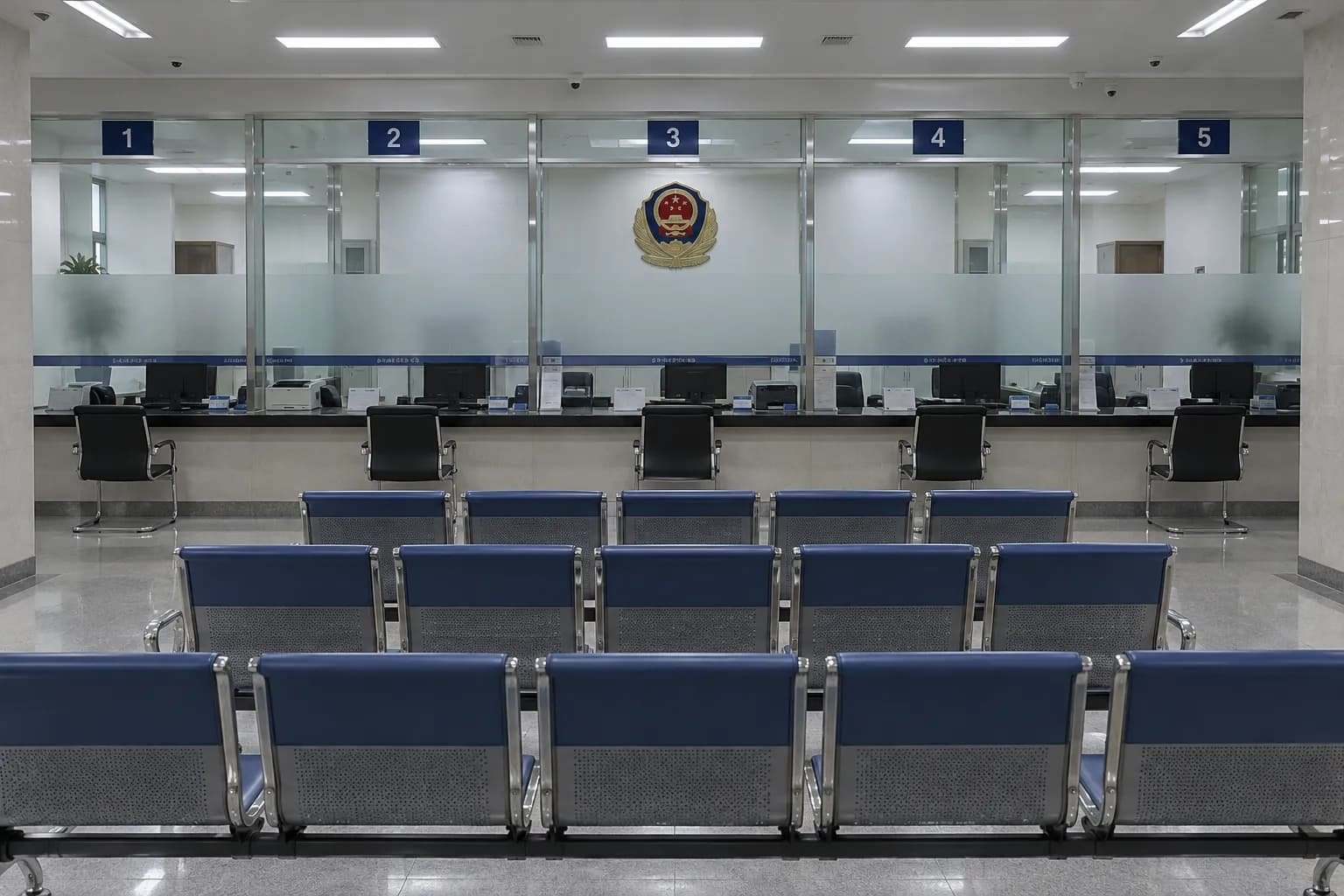
The Exit-Entry Bureau requires several steps to complete this conversion. The entry date stamped in the passport on arrival marks the day the thirty-day clock starts. Before applying, the student must also complete the health check required by the local authority, and the resulting record is submitted alongside the application.
- Gather proof of university enrollment, the passport, the arrival registration from the place of residence, and the completed health check record
- Submit the application in person at the Exit-Entry Bureau covering the city where the university is located, since the process cannot be completed online or by mail
- Wait for the bureau to process and issue the residence permit, which is affixed directly into the passport
Once the permit is issued, it replaces the X1 visa as the document governing the student’s legal stay. The permit’s own validity period, counted from issuance, determines how long the student can remain before the next renewal or departure.
Missing the thirty-day deadline turns the stay into an overstay, which carries penalties and complicates any future visa application to China. There is no quiet extension available at the counter; the student has to file before the window closes or resolve the lapse as a formal violation afterward.
X2 visa holders skip this entire process. Because their programs run under six months, the visa itself covers the full length of the stay, and no residence permit conversion is required. That difference is the practical payoff of the earlier choice between the two categories. X1 buys a longer stay at the cost of this extra bureaucratic step, while X2 trades convenience for a shorter time in the country.
Applying for the Chinese Government Scholarship
The Chinese Government Scholarship, administered through the China Scholarship Council, funds study at several academic levels. Eligibility rules differ enough between them that an applicant has to pick the right category before assembling documents. The scholarship spans four categories: a bachelor’s scholarship for applicants entering an undergraduate program, a postgraduate scholarship covering master’s-level study, a PhD scholarship for doctoral candidates, and a general scholar category aimed at non-degree study or research.
Each category carries its own academic prerequisites set by the host university, on top of whatever the Scholarship Council requires. A university that admits undergraduates freely may still have a separate, stricter bar for its CSC-funded postgraduate seats.
Among the supporting documents, a Non-Criminal Record certificate is non-negotiable. It has to come from the applicant’s local public security authority and is normally only accepted if it was issued within the six months before submission. Applying for this certificate early matters more than it does for most other paperwork, since issuing offices can take weeks and an expired certificate forces a reapplication.
Deadlines are not uniform across the scholarship. Some embassies set their own Type A deadline. Some universities also run a separate pre-application stage with its own earlier cutoff for issuing the invitation letter, which is needed before the embassy application can even start. Where both exist, the earlier of the two should drive the applicant’s planning. Missing a university pre-application deadline can rule out the embassy route entirely, even if its own deadline is still weeks away.
Once a scholarship offer is confirmed, the visa paperwork shifts. A CSC recipient applies with the JW201 form, the version reserved for government-sponsored students. Applicants funding their own studies use the JW202 form. Everything else in the embassy application, from the enrollment letter to the passport and fingerprint requirements, follows the same process already described for any long-term study visa.
Age limits and eligibility by category
Each scholarship level sets its own ceiling on applicant age:
- Bachelor’s scholarship: under 25
- Postgraduate scholarship: under 35
- PhD scholarship: under 40
- General scholar category: under 45, with at least a high school diploma
The general scholar route sets the widest window and the lowest academic floor, suiting applicants pursuing non-degree study. Falling inside the age limit only clears one gate. The host university still applies its own academic record and language proficiency requirements, and a scholarship application can fail on those even when the applicant qualifies by age.
Working and interning during your studies
A student residence permit confirms your right to study in China, not to earn money there. Taking on off-campus work, paid or unpaid, needs a specific permission annotated on the permit itself before you start. Without that annotation, any internship or job counts as unauthorized work, regardless of how informal or short-term it seems.

Getting that annotation follows a fixed order:
- Secure a university-issued letter approving the specific internship or off-campus activity
- Take that letter to the local Exit-Entry Bureau, the same office that handled your residence permit conversion
- Apply for the work annotation to be added to your existing permit
- Wait for the bureau to process and return the updated permit before beginning any work
Students invited by well-known enterprises have a separate option: a one-year internship visa, issued independently of the regular student residence permit. This route needs an invitation letter from the hosting enterprise plus proof of current university enrollment. It suits a defined internship arranged directly with a specific company. Its validity period runs on its own terms and does not track the academic calendar.
Either path, the university-approved annotation or the separate internship visa, has to be in place before the first day of work. Immigration authorities treat the annotation as the only valid proof that an internship was authorized, so a university’s verbal approval or an informal arrangement with an employer carries no weight at the Exit-Entry Bureau.
Working without the annotation risks cancellation of the residence permit itself, which can end the study program along with the internship. That risk applies equally to short unpaid placements and to longer paid internships. What matters for enforcement is whether the permission was recorded.
Moving from a student visa to a work visa after graduation
Eligibility for the Z visa, China’s standard work visa, starts with the credential itself. A bachelor’s degree or higher earned at a Chinese university is the baseline most employers and immigration officials check first, before any job offer or contract is weighed. Graduates without that level of degree face a harder path, since the policy framework around the Z visa was built around degree holders moving into skilled roles.
Holding the right degree does not convert a visa on its own. The standard route still runs through an employer: the graduate must secure a job offer from a company willing to sponsor the work visa, the employer must apply for a work permit on the graduate’s behalf, and the graduate must file the status change at the local Exit-Entry Bureau, converting the student residence permit into a work-authorized one.
This sequence treats the fresh graduate the same as any other foreign applicant. The employer’s sponsorship and the formal work permit conversion both have to clear before the graduate can legally start the job.
That standard sequence assumes the graduate already has qualifying work experience, a requirement most new graduates simply have not had time to meet. A graduate employment policy in select cities addresses that gap directly. Under this policy, an employer can still sponsor the visa and file the conversion, but the applicant is not required to show prior work experience before applying. The degree, the job offer and the employer’s sponsorship carry the application on their own.
This difference matters most for students weighing where to job-hunt. A graduate with an offer in a city covered by the policy can move from student status to work status right after finishing their degree. A graduate with an otherwise identical offer elsewhere may need to document qualifying experience first, even with the employer and work permit conversion already in place.
Pilot cities for direct graduate work visas
A handful of cities relax the experience rule entirely. Fresh graduates in these locations can apply for a work visa right after finishing their degree, with no prior job history needed:
- Beijing
- Shanghai
- Guangzhou
- Shenzhen
- Hangzhou
The policy reflects each city’s push to retain international graduates for its own labor market. It is a local pilot, not a nationwide change to visa rules. A graduate working in Chengdu or Xi’an falls back to the standard path, where the Exit-Entry Bureau still expects qualifying work experience before it approves the status change. That gap makes city choice a real factor in planning the move from student life to employment, alongside where the job offer happens to be.
Long-term residence and entrepreneurship options
Permanent residence in China typically requires two consecutive years of legal work under a valid work visa, along with broader standards for how much time the applicant has actually spent in the country. A graduate who converts from student status to a Z visa and stays with one employer, or moves between employers without a gap in status, starts building toward that threshold immediately. Breaks in legal work status can reset the count, including a lapse while waiting on a new employer’s sponsorship.
Graduates of internationally renowned universities have a separate option: a Private Affairs Residence Permit for entrepreneurship. It is open to those who apply within two years of graduation and valid for up to two years. This route requires no employer sponsor and no job offer. It is built for someone ready to register a company and operate it directly, so it does not suit someone still looking to accumulate the work history that a Z visa conversion or permanent residence application would otherwise demand.
The choice between these paths comes down to what the graduate already has lined up. Someone with a concrete business idea and the capital to launch it gains little from spending a year or two as an employee first. The entrepreneurship permit lets them start immediately, on a clock that runs independently of employer sponsorship.
Someone still building a career, or uncertain whether they want to stay in China long-term, is usually better off renewing work visas year by year, since this lets the two-year work requirement toward permanent residence accumulate on its own. Permanent residence removes the need for renewals altogether. It rewards graduates whose employment and ties to China are already settled.
Frequently Asked Questions
How can international students get a Chinese green card after graduating?
Permanent residence generally requires two consecutive years of legal work in China along with meeting broader residence time standards set by immigration authorities. Graduates who prefer starting a business instead can apply for a Private Affairs Residence Permit for entrepreneurship, which is tied to a university’s international standing rather than to an employer relationship.
What is the Private Affairs Residence Permit for entrepreneurship?
This permit lets graduates of internationally renowned universities pursue a business venture in China within a set window after graduation. It functions separately from employer-sponsored work visas, so a graduate can use it to start a company directly instead of first accumulating work experience through a sponsoring employer.
Which cities let fresh graduates apply directly for a work visa?
Beijing, Shanghai, Guangzhou, Shenzhen and Hangzhou run a graduate employment policy that waives the usual prior work-experience requirement for new graduates. A graduate with a job offer in one of these cities can move from student status to work status right after finishing a degree, while graduates elsewhere typically still need qualifying experience first.
Does an internship visa let me work anywhere in China, or only for one employer?
The one-year internship visa ties a student to the specific hosting enterprise that issued the invitation letter, so it does not function as general work authorization. It suits a defined placement arranged directly with that company, and it runs on its own validity period separate from the academic calendar.
Why does choosing between X1 and X2 matter beyond the visa application itself?
The category decided at the embassy shapes every step that follows arrival. X1 holders carry an added obligation to convert into a residence permit for study within a fixed window, while X2 holders finish their entire stay on the original visa without ever visiting the Exit-Entry Bureau for that purpose.
For more detail on the China route, see our guides to the China student visa (X1) and the cost of living in China for students, or compare it with study immigration to Malaysia.
Conclusion
Each choice in this pathway sets up the next one, so the most useful step is to decide early what the stay is really for. An applicant aiming only at a degree can optimize for the simplest visa and scholarship fit. Someone hoping to work and settle afterward should pick the program length, city, and funding route with that later conversion already in mind, since reworking a mismatched visa category or missing work annotation later costs far more time than planning for it before the first application is filed.