

Most delays we see in Turkish university files have nothing to do with grades. They come from a missing stamp, a translation done by the wrong person or a passport that expires too soon. Knowing the documents required to study in Turkey before you start saves weeks, and sometimes a whole semester. This checklist covers the three stages every international student goes through: university admission, the student visa and the residence permit after arrival, plus the extra papers needed at registration
Requirements change slightly between universities and consulates, so use this as your master list and confirm the details on each official page
Stage 1: documents for university admission
For the application itself, most universities accept scanned copies. Private universities are usually relaxed at this stage and issue a conditional offer within days. State universities ask for more and stick closely to their published calendars. Our step-by-step guide on applying to Turkish universities explains the process around these papers
- Passport copy (the photo page), valid for at least the first year of study
- High school diploma, or a temporary graduation certificate if the diploma is not issued yet
- High school transcript showing all years and subjects
- Exam results where required, such as YÖS, SAT, ACT or your national exam
- Language certificate: IELTS, TOEFL or PTE for English programs, TÖMER for Turkish programs
- A recent passport-style photo with a white background
- For master’s and PhD: bachelor’s diploma, transcript, CV, reference letters and a statement of purpose
A motivation letter is optional at many private universities but expected for competitive programs, scholarships and graduate study. Our guide to writing a motivation letter for Turkish universities shows what admissions staff actually look for
Translations, notarisation and apostille
This is the part that trips people up. Turkish institutions want official documents in Turkish, or sometimes in English, and they want proof that the documents are genuine
Apostille or legalisation
If your country is a member of the Hague Apostille Convention, get an apostille on your diploma and transcript from the authority that issues them in your country. If it is not, you will usually need legalisation by your Ministry of Foreign Affairs and then by the Turkish embassy or consulate. Students from countries such as Iran, Iraq and Egypt should check the current rules with their Turkish consulate, because the steps differ
Sworn translation
Translations are normally done by a sworn translator (yeminli tercüman) in Turkey and then certified by a Turkish notary. A translation made at home may be accepted if it is certified by the Turkish consulate, but many universities and immigration offices simply prefer a Turkish notarised version. In our experience it is cheaper and faster to do the translations in Turkey after you arrive, as long as the apostille is done before you leave home
Stage 2: documents for the Turkish student visa
Citizens of most countries need a student visa, applied for at the Turkish embassy or consulate, or through its visa service provider, in their home country. The core file looks similar everywhere
- Completed visa application form from the official pre-application system
- Passport valid for longer than the visa, with blank pages
- Official acceptance letter from the Turkish university
- Proof of funds, usually bank statements and a sponsor letter from a parent
- Biometric photos
- Flight reservation and accommodation details, often a dormitory confirmation
- Travel health insurance for the first weeks
- Visa fee payment
Some consulates also ask for a police certificate, a birth certificate or proof of previous education. For a full look at the visa and what follows, see our article on the Turkey student visa and residence permit
Stage 3: registration at the university
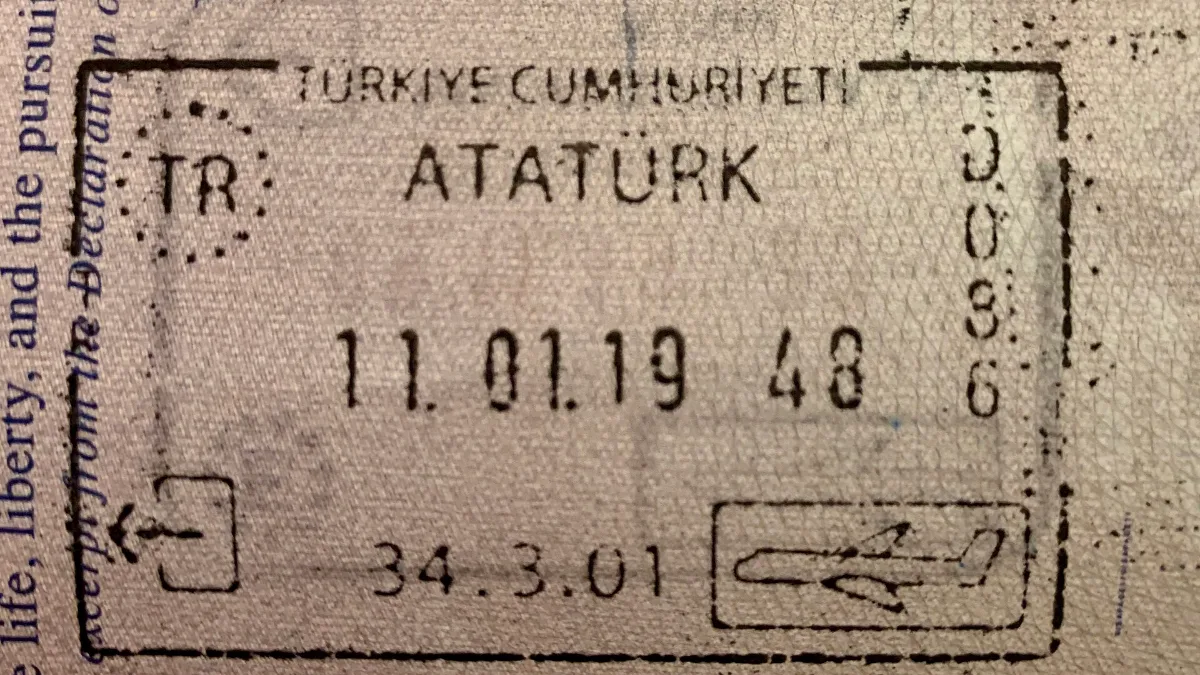
When you arrive, the international office registers you in person. Bring originals of everything you sent online, plus the Turkish translations. The usual list includes your passport with entry stamp, original diploma and transcript with apostille, notarised translations, passport photos, your offer letter and the tuition payment receipt
State universities will also ask for the high school equivalence certificate (denklik) from the Ministry of National Education. Private universities often ask for it during your first year. The process is explained in our page on diploma equivalence in Turkey. Once you are registered, you can request a student certificate (öğrenci belgesi), which you need for the next stage
Stage 4: documents for the student residence permit
The student residence permit is applied for online through the e-ikamet system of the Presidency of Migration Management, after which you attend an appointment or submit your file through the university, depending on the city. Several universities now collect files on behalf of their students. Apply as soon as you have your student certificate and before your visa runs out
| Document | Where you get it | Notes |
|---|---|---|
| Online application form | e-ikamet system | Printed and signed |
| Passport and copies | Your own | Photo page, visa and entry stamp |
| Biometric photos | Photo studio | Usually two |
| Student certificate | University student affairs | Recent date |
| Health insurance | Insurer or GSS | Must cover the permit period |
| Proof of address | Dormitory or notary | Dorm letter or notarised lease |
| Fee receipt | Tax office or bank | Students usually pay mainly the card fee |
Health insurance is the item students most often get wrong. A cheap policy that does not match the permit dates will be rejected. Our guide to student health insurance in Turkey compares private policies with the state GSS scheme
Want someone to check your documents before you submit?
Our team reviews your file, arranges sworn translations and guides you through admission, visa and residence permit so nothing gets sent back
Extra documents for special cases
A few groups need more than the standard file. Students under 18 need a notarised consent letter from both parents, and for the residence permit a parent or guardian information document, unless they entered Turkey on a student visa. Bring birth certificates translated and apostilled, since offices sometimes ask for them to confirm the parents’ names
Transfer students need course descriptions and syllabi stamped by their current university, so the Turkish faculty can decide which credits to recognise. Medicine, dentistry, nursing and other health students are usually asked for a health report and vaccination records, often including hepatitis B, before clinical training begins. Scholarship holders may need the award letter in the visa file too, as it replaces most proof of funds. If any of these apply to you, request the papers early, because foreign universities and hospitals can take a month or more to issue them
Common mistakes with the documents required to study in Turkey
- Passports that expire within a year, which can shorten your residence permit
- Name spellings that differ between passport, diploma and translation
- Diplomas with an apostille from the wrong authority
- Bank statements showing a large deposit made just before the visa appointment
- Leases that are not notarised, which immigration offices do not accept as proof of address
- Throwing away the original envelope or courier receipt when a document was sent by post
Small inconsistencies cause the biggest headaches. A missing letter in a surname can mean a new translation, a new notary visit and a new appointment
Your next step
Make a folder, physical and digital, with three sections: originals, apostilled copies and translations. Scan everything in colour and name the files clearly. Then check the expiry date of your passport today, because renewing it is the one thing nobody can speed up for you. If you want a second pair of eyes, send us your documents and we will tell you what is missing for the 2027 intake
Frequently Asked Questions
What documents are required to study in Turkey?
For admission you need a passport copy, high school diploma and transcript, language certificate and sometimes exam results. Later you need a student visa file, registration documents and residence permit papers
Do my documents need an apostille?
Usually yes, for the diploma and transcript at registration. If your country is not part of the Apostille Convention, you need legalisation by your foreign ministry and the Turkish consulate instead
Can I translate my documents myself?
No. Translations should be done by a sworn translator and usually certified by a Turkish notary, or certified by a Turkish consulate abroad
When should I apply for the student residence permit?
As soon as you have registered and received your student certificate, and before your visa or visa-free stay ends. Many universities help with the application
Do I need high school equivalence (denklik)?
State universities require it at registration. Private universities often ask for it during the first year, so it is wise to start the process early






