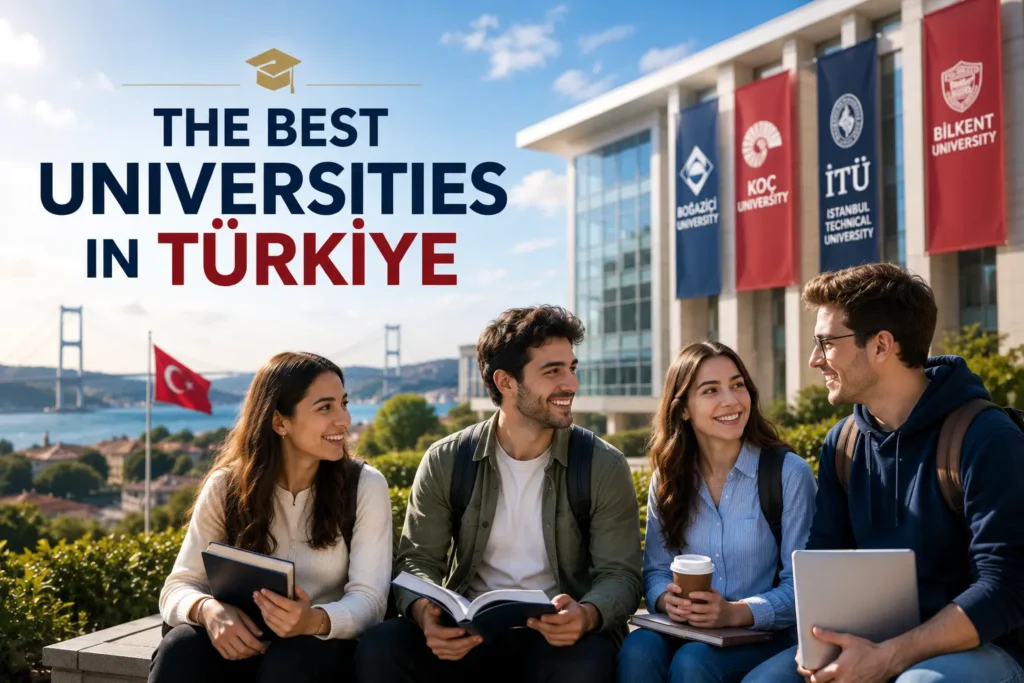

Türkiye boasts a vibrant academic landscape with several institutions consistently recognized among the world’s elite. For international students seeking quality education, Koç University, Middle East Technical University (METU), and Boğaziçi University frequently stand out in global rankings as top choices.
Türkiye, strategically positioned as a bridge between Europe and Asia, has rapidly emerged as a compelling destination for higher education. The country’s commitment to academic excellence, coupled with its rich cultural tapestry and economic accessibility, attracts a growing number of international students annually. This guide aims to navigate the diverse educational offerings, providing a holistic perspective that combines robust rankings with invaluable insights into the student experience. Choosing a university is a pivotal decision, and understanding both the academic standing and the practicalities of student life is essential. Saya Group is dedicated to helping aspiring students make informed choices, ensuring a smooth transition into their Turkish academic journey.
Why Choose Turkey for Higher Education?
Studying in Turkey offers a unique blend of opportunities that extend beyond the classroom, attracting a diverse cohort of international students. One of the most significant advantages is the cost of studying in Turkey, which is considerably more affordable than in many Western European or North American countries. This affordability extends not only to tuition fees but also to daily living expenses, making a high-quality education accessible without substantial financial burden. The Turkish higher education system is robust, with many universities offering state-of-the-art facilities and a commitment to modern pedagogical approaches.
Beyond economics, Turkey provides an exceptionally rich cultural experience. Students can immerse themselves in a fascinating blend of Eastern and Western traditions, explore ancient historical sites, and enjoy vibrant contemporary arts scenes. The country’s unique geographical position also means a diverse climate and stunning natural landscapes, from the Mediterranean coastlines to the historical wonders of Cappadocia. Furthermore, Turkey’s strategic location serves as a hub, offering excellent connectivity and opportunities for international networking, making it an ideal place for those looking to broaden their global perspectives and build international connections. The welcoming nature of Turkish society often ensures that studying in Turkey for foreigners is a warm and enriching experience, fostering a sense of belonging among the international student community.
Moreover, Turkish universities are increasingly recognized for their strong research output and innovative programs. Many institutions have forged strong international partnerships, providing students with opportunities for exchange programs and collaborative projects. The emphasis on practical, hands-on learning, combined with theoretical knowledge, prepares graduates for the global job market. For those interested in technology, engineering, social sciences, or humanities, there are abundant programs designed to meet diverse academic interests. This dynamic academic environment, coupled with a supportive ecosystem, positions Turkey as a prime choice for ambitious students worldwide.
Top 10 Best Universities in Türkiye (Recent Global Rankings)
When assessing the top-ranked universities in Turkey for international students, it is crucial to consider reputable global rankings such as those provided by Times Higher Education (THE) and U.S. News & World Report. These rankings evaluate institutions based on various criteria including research performance, academic reputation, teaching quality, international outlook, and industry engagement. While specific positions can fluctuate annually, certain universities consistently appear at the forefront, recognized for their academic rigor and contributions to knowledge. The following table synthesizes information from the most recent available rankings (THE 2025 and U.S. News 2024-2025) to provide a clear overview of some of Türkiye’s leading institutions, offering prospective students a valuable starting point in their search.
| University Name | City | THE World Rank (2025) | U.S. News Global Rank (2024-2025) | Key Strengths for International Students |
|---|---|---|---|---|
| Koç University | Istanbul | 351–400[1] | 457 (tie)[2] | High research output, strong industry links, extensive English-taught programs, vibrant campus life. |
| Middle East Technical University (METU) | Ankara | 401–500[1] | 568 (tie)[2] | Excellence in engineering and natural sciences, significant international collaborations, strong graduate prospects. |
| Sabancı University | Tuzla, Istanbul | 501–600[1] | 739 (tie)[2] | Interdisciplinary approach, robust research infrastructure, high international student satisfaction, modern campus. |
| Boğaziçi University | Istanbul | 501–600[1] | 466 (tie)[2] | Strong reputation in social sciences and humanities, historical prestige, picturesque campus, high demand. |
| Istanbul Technical University (ITU) | Istanbul | 601–800[1] | 639 (tie)[2] | Leading institution for engineering, architecture, and applied sciences, rich history, strong alumni network. |
| Bilkent University | Ankara | 601–800[1] | 831 (tie)[2] | First private non-profit university, strong emphasis on research, modern facilities, comprehensive English programs. |
| Hacettepe University | Ankara | 1001–1200[1] | 657 (tie)[2] | Renowned for medical and health sciences, strong research focus, extensive academic programs. |
| Ankara University | Ankara | 1201–1500[1] | 783 (tie)[2] | One of the oldest and largest, wide range of disciplines, significant contributions to national development. |
| Istanbul University | Istanbul | 1201–1500[1] | 806 (tie)[2] | Historical institution with a vast array of programs, strong presence in medical and legal fields, central location. |
| Çankaya University | Ankara | 1201–1500[1] | 707 (tie)[2] | Known for engineering and architecture, strong academic staff, modern campus. |
Spotlight on the Top 3 Universities for International Students
Among the multitude of outstanding institutions, Koç University, Middle East Technical University (METU), and Boğaziçi University consistently stand out, offering world-class education and vibrant student experiences. These institutions are frequently highlighted in international rankings of Turkish universities, underscoring their global competitiveness.
Koç University: A Hub of Innovation and Research
Koç University, located in Istanbul, is consistently recognized as one of Türkiye’s leading universities by various international bodies. Established as a private, non-profit institution, it is renowned for its strong emphasis on research, interdisciplinary education, and a truly global outlook. The university boasts state-of-the-art facilities, a low student-to-faculty ratio, and a curriculum largely taught in English, making it highly attractive for international students. Its academic environment fosters critical thinking, creativity, and leadership, with strong ties to industry and a commitment to producing graduates who are well-prepared for the global workforce. Students at Koç benefit from extensive scholarship opportunities and a diverse campus that encourages cultural exchange.
Middle East Technical University (METU): Engineering and Natural Sciences Excellence
Situated in Ankara, Middle East Technical University (METU) holds a distinguished reputation, particularly in the fields of engineering, natural sciences, architecture, and urban planning. As a public university, METU has a long-standing tradition of academic excellence and research innovation. A significant portion of its programs is conducted in English, facilitating a seamless integration for international students. The university is known for its rigorous academic standards, robust research infrastructure, and numerous international collaborations. Graduates from METU are highly sought after by employers both within Turkey and internationally, reflecting the quality and accreditation of its degrees. The campus itself is a dynamic hub of student activities and intellectual discourse, providing a rich educational experience.
Boğaziçi University: A Blend of Tradition and Modernity
Boğaziçi University, nestled on the European side of Istanbul with breathtaking views of the Bosphorus, is one of Türkiye’s most prestigious public universities. Known for its strong programs in social sciences, humanities, engineering, and education, Boğaziçi offers a uniquely inspiring academic setting. The primary language of instruction is English, a tradition that dates back to its founding as Robert College in 1863. The university prides itself on its liberal arts tradition, fostering a well-rounded education that emphasizes intellectual freedom and critical inquiry. Boğaziçi’s alumni network is vast and influential, and its degrees are highly respected globally. The vibrant campus culture, combined with its historical significance and prime location, makes it a highly desirable choice for international students seeking a blend of academic rigor and cultural immersion.
Not sure which university or scholarship fits you?
Get a free assessment of your admission and scholarship chances from Saya Group advisors in Istanbul.
Book a free consultationPublic vs. Private Universities in Türkiye: Which one is for you?
Deciding between public and private (also known as foundation) universities is a critical step for any international student considering higher education in Turkey. Both types of institutions offer distinct advantages and characteristics that cater to different academic aspirations and financial situations. Understanding these differences can significantly streamline the university selection process.
Public universities in Turkey are state-funded, which generally translates to lower tuition fees for both domestic and international students. This makes them a highly attractive option for those seeking quality education at a more affordable cost of studying in Turkey. They often have larger student bodies, extensive historical roots, and a wide array of programs across various disciplines. Admission to public universities can be highly competitive, often requiring strong performance in entrance exams like the YÖS (for international students) or SAT/ACT. The academic culture in public universities can be more traditional, with a greater emphasis on theoretical knowledge and research. While many public universities offer programs in English, a significant portion of their curriculum might be taught in Turkish, especially for certain departments, requiring proficiency in the local language.
Private, or foundation, universities, on the other hand, are funded by private endowments and typically have higher tuition fees. However, these fees often come with benefits such as smaller class sizes, more modern facilities, and a greater emphasis on practical, industry-oriented education. Private universities frequently offer a broader range of English-taught programs in Turkish universities, making them particularly appealing to students who prefer to study entirely in English. Their admission processes can sometimes be more flexible, often relying on high school GPA, recommendation letters, and standardized test scores, in addition to their own entrance exams or interviews. Many private universities also offer generous scholarships to attract talented international students, which can significantly offset the higher tuition costs. The campus life at private universities often features more student clubs, international exchange programs, and career services designed to enhance employability.
When making this choice, consider your budget, preferred language of instruction, academic interests, and desired campus environment. Both public and private universities contribute significantly to the strength of the Turkish higher education system, with many, like Koç University (private) and Middle East Technical University (public), excelling in global rankings. Saya Group advises prospective students to research specific program offerings and scholarship opportunities at both types of institutions to find the best fit for their individual needs.
Essential Factors for Choosing the Right University
Beyond rankings and reputation, several practical factors play a crucial role in determining the ideal university experience for international students in Türkiye. A thoughtful consideration of these elements can significantly impact academic success and overall satisfaction.
Language of Instruction: English in Contrast to Turkish
One of the foremost considerations for international students is the language of instruction. While Turkish is the official language, an increasing number of universities, particularly the top-ranked universities in Turkey for international students, offer a wide variety of English-taught programs in Turkish universities across all disciplines. For students not proficient in Turkish, opting for an English-medium program is often the most direct path. However, even when enrolled in an English-taught program, learning basic Turkish phrases can greatly enhance the daily living experience and cultural integration. Some universities also offer preparatory Turkish language courses for incoming international students. It’s vital to check the specific language requirements for your desired program and faculty.
Geographical Location: Why Istanbul or Ankara?
The choice of city can profoundly shape your university experience. Istanbul and Ankara emerge as prime locations due to their concentration of top universities, diverse cultural offerings, and robust urban infrastructure. Istanbul, a sprawling metropolis, offers a dynamic, cosmopolitan environment with endless cultural, social, and professional opportunities. It’s home to several of the best universities in Türkiye, combining historical charm with modern amenities. Ankara, the capital city, provides a more organized and politically central experience. It also hosts numerous highly-regarded universities, offering a slightly more academic-focused atmosphere with excellent public services and a lower cost of living compared to Istanbul. Other cities like Izmir and Antalya also offer quality institutions and unique regional experiences, each with its own advantages in terms of student life and regional specialties.
Opportunities in Research and Laboratories
For students, especially those pursuing postgraduate degrees or research-intensive undergraduate programs, the availability and quality of research and laboratory opportunities are paramount. Many Turkish universities, particularly those with high global rankings, invest heavily in cutting-edge research facilities and encourage student participation in research projects. This strong focus on research contributes significantly to a university’s academic reputation and provides valuable experience for students. Prospective students should investigate the specific research areas of interest within their chosen departments, the faculty’s ongoing projects, and the resources available, such as specialized labs, research centers, and funding opportunities. A strong research environment can significantly enrich your academic journey and career prospects.
Campus Life and Student Support Services
The vibrancy of campus life and the availability of comprehensive student support services are crucial for a fulfilling international student experience. Beyond academics, a university’s environment should offer opportunities for personal growth, cultural exchange, and well-being. Look for institutions with diverse student clubs, sports facilities, cultural events, and social activities that cater to a wide range of interests. Moreover, robust support services such as international student offices, academic advising, career counseling, psychological support, and disability services can make a significant difference in a student’s adjustment and success. Saya Group always emphasizes the importance of a supportive ecosystem that helps students thrive both academically and personally.
Post-Graduation Prospects and Employability
Ultimately, higher education is an investment in your future career. Therefore, considering the post-graduation prospects and employability rates associated with a university and its programs is a vital factor. Research indicates the importance of institutions that maintain strong ties with industries, offer internship opportunities, and have active career services departments. Many of the best universities in Türkiye have excellent alumni networks and strong reputations that facilitate employment for their graduates, both domestically and internationally. Understanding where graduates find employment, the average starting salaries, and the support offered for entrepreneurial ventures can provide valuable foresight into the long-term benefits of your chosen program and university.
Choosing the right university is a blend of academic alignment, cultural fit, and future aspirations; a holistic approach ensures a truly enriching educational journey in Türkiye.
Admission Requirements and Application Process
Navigating the admission requirements and application process for universities in Turkey can seem daunting, but with a clear understanding of the steps and necessary documentation, it becomes a manageable endeavor. The process can vary slightly between public and private universities, as well as by program level (undergraduate, graduate, or doctoral).
General Admission Steps for International Students
- Research Programs and Universities:Begin by identifying programs and universities that align with your academic and career goals. Pay attention to the specific requirements of each program.
- Check Eligibility Criteria:Ensure you meet the academic qualifications, which typically include a high school diploma for undergraduate studies or a bachelor’s degree for graduate programs.
- Prepare Required Documents:Gather all necessary paperwork well in advance.
- Meet Language Proficiency:Demonstrate English proficiency (TOEFL, IELTS) for English-taught programs or Turkish proficiency (TOMER) for Turkish-taught programs.
- Take Entrance Exams:For public universities, the YÖS (Foreign Student Examination) is common. For some programs, international exams like SAT, GRE, or GMAT might be required or preferred.
- Submit Online Application:Most universities have an online application portal.
- Attend Interviews (if required):Some programs, especially at the graduate level, may require an interview.
- Receive Acceptance Letter:Upon successful evaluation, you will receive an official letter of acceptance.
- Apply for a Student Visa:With your acceptance letter, you can apply for a Turkish student visa.
Key Documents Required for Admission
- High School Diploma and Transcript (translated into English or Turkish and notarized)
- Passport Copy
- Proof of English Proficiency (e.g., TOEFL iBT, IELTS Academic scores)
- Proof of Turkish Proficiency (if applicable, e.g., TOMER certificate)
- Standardized Test Scores (e.g., YÖS, SAT, GRE, GMAT, if required by the university/program)
- Letter of Motivation/Statement of Purpose
- Letters of Recommendation (usually 2-3 for graduate programs)
- Curriculum Vitae (CV) / Resume
- Financial Guarantee/Proof of Funds (to demonstrate ability to cover living expenses)
- Application Fee Receipt
- Photographs (passport-sized)
Importance of Exams: YÖS, GRE/GMAT
For international students aiming for public universities, theYÖS (Yabancı Öğrenci Sınavı)is a crucial examination. Administered by individual universities, it typically assesses general aptitude in mathematics, logic, and verbal reasoning. While a general YÖS exam existed historically, most universities now conduct their own, so applicants must check each university’s specific requirements. A strong YÖS score can significantly boost your chances of admission to competitive programs in public universities. For graduate studies, especially in fields like business or engineering, standardized international exams such as theGRE (Graduate Record Examinations)orGMAT (Graduate Management Admission Test)are often required or highly recommended, particularly for top-ranked universities in Turkey for international students that emphasize research and quantitative skills. Meeting or exceeding the minimum score requirements for these exams is essential for a successful application.
Saya Group recommends thoroughly researching the specific examination requirements for each desired university and program. Preparation for these exams should begin well in advance to ensure competitive scores. Additionally, it is prudent to apply to multiple institutions to increase the chances of securing admission, given the competitive nature of some programs.
Living Costs and Scholarship Opportunities
One of Türkiye’s most attractive features for international students is its relatively affordable cost of living compared to many other popular study destinations. However, understanding and planning for these expenses, alongside exploring scholarship opportunities, is vital for a stress-free academic journey. This section delves into typical living costs and outlines avenues for financial assistance, directly addressing a key concern for those studying in Turkey for foreigners.
Cost of Living: Housing, Food, and Transportation
The cost of studying in Turkey extends beyond tuition fees to encompass daily expenses, which can vary significantly depending on the city and individual lifestyle choices. Major cities like Istanbul and Ankara will naturally have higher living costs than smaller towns, but generally, students find Turkey to be quite economical.
- Accommodation:This is often the largest expense.
- University Dormitories:Typically the most affordable option, ranging from 100-300 USD per month. They offer basic amenities and a social environment.
- Shared Apartments:A popular choice for more independence, costing between 150-400 USD per person per month, depending on location and number of roommates.
- Single Apartments:Can range from 250-600+ USD per month, especially in prime city areas.
- Food:Eating out can be very affordable, especially at student-friendly eateries or university cafeterias.
- Groceries:Cooking at home is economical, with monthly grocery bills averaging 80-150 USD.
- Dining Out:A meal at a modest restaurant costs around 5-10 USD, while a traditional Turkish street food item like a doner kebab might be 2-4 USD.
- Transportation:Turkish cities have efficient and affordable public transportation systems.
- Student Discount Cards:Available in most cities, significantly reducing fares. A monthly public transport pass might cost 15-30 USD.
- Taxis/Ride-sharing:More expensive, but useful for occasional travel.
- Utilities and Personal Expenses:These include internet, phone bills, heating, electricity, and personal care items. These usually sum up to 50-100 USD per month.
- Health Insurance:Mandatory for international students, costing around 50-100 USD annually.
Overall, a realistic monthly budget for an international student in Turkey, excluding tuition, can range from 300-600 USD, depending heavily on lifestyle and city. This affordability makes Turkish higher education an attractive proposition for a wide demographic of students.
How to Apply for Government Scholarships (Türkiye Bursları)
The Türkiye Bursları scholarship program is one of the most comprehensive and sought-after scholarships globally, fully funded by the Turkish government. It aims to support international students in pursuing full-time or short-term programs at the best universities in Türkiye. The scholarship covers a wide range of benefits, making it an incredibly valuable opportunity.[3]
Benefits of Türkiye Bursları:
- Monthly stipend (varies by study level)
- Full tuition fee waiver
- Round-trip flight ticket to Turkey
- Health insurance
- Accommodation in public university dormitories
- One-year Turkish language course (mandatory for all recipients, regardless of program language)
Application Process:
- Application Period:Applications are typically open for a limited period, usually between January and February each year, for studies commencing in the next academic year.
- Online Application:All applications are made online through the Türkiye Bursları official website. Applicants create an account and fill in their personal and academic information.
- Required Documents:This generally includes a passport, high school diploma and transcript (for undergraduates), bachelor’s/master’s degree and transcripts (for graduates), letters of recommendation, a statement of purpose, and sometimes international exam scores (e.g., SAT, GRE, GMAT).
- University and Program Selection:Applicants can select up to 12 university and program preferences.
- Interviews:Shortlisted candidates are invited for an interview, conducted by representatives of Türkiye Bursları in various countries. This typically involves a personal statement, academic background discussion, and motivation for studying in Turkey.
- Results:Successful candidates are notified, usually around July.
Saya Group strongly advises prospective applicants to prepare all documents diligently and apply early to maximize their chances. The program is highly competitive, attracting thousands of applicants worldwide.
Other Scholarship Opportunities
Beyond Türkiye Bursları, many Turkish universities, both public and private, offer their own scholarships for international students. These can be full or partial tuition waivers, merit-based scholarships, or need-based grants. Private universities, in particular, often use scholarships as a key strategy to attract top talent. Students should directly visit the websites of their preferred universities and inquire about available scholarships for international students. Additionally, various organizations, foundations, and governments in students’ home countries may offer scholarships for studying abroad. Thorough research is key to uncovering these diverse funding avenues. The Saya Group provides assistance in identifying and applying for various scholarship programs, enhancing the accessibility of education in Turkey for a wider range of international students.
Securing a scholarship can transform your educational journey in Türkiye, turning aspirations into tangible achievements while easing financial burdens.
Frequently Asked Questions (FAQs)
Which university in Turkey is best for international students who only speak English?
Koç University, Sabancı University, Middle East Technical University (METU), and Boğaziçi University are excellent choices, offering extensive English-taught programs across various disciplines.
What are the major differences between the admission processes for public and foundation universities?
Public universities often require the YÖS exam and have fixed deadlines, while foundation (private) universities may accept SAT/ACT scores and have more flexible admission periods.
Are the degrees awarded by Turkish universities recognized globally, specifically in the EU and North America?
Yes, degrees from accredited Turkish universities are generally recognized internationally, particularly those fromtop-ranked universities in Turkey for international students, due to adherence to Bologna Process standards.
How do I apply for the Turkish Government Scholarship (Türkiye Bursları) program?
Applications are submitted online via the official Türkiye Bursları website, typically between January and February, requiring academic documents, a statement of purpose, and an interview.
Is it mandatory to learn Turkish language if I enroll in an English-taught program?
While not mandatory for academic progression in English-taught programs, a one-year Turkish language course is often a compulsory component of the Türkiye Bursları scholarship, and basic Turkish greatly enhances daily life.
Interested in health sciences? Compare the best medical universities in Turkey and learn how to study pharmacy in Turkey.
Choosing a field? See our guides to studying engineering in Turkey and studying architecture in Turkey.
Final Verdict: Making Your Choice
Choosing a university is one of the most significant decisions in a student’s life, and for international students considering Türkiye, the landscape offers a wealth of opportunities. The best universities in Türkiye are not just institutions of academic excellence; they are gateways to a unique cultural experience, offering a blend of historical depth and modern dynamism. Your ultimate choice should be a thoughtful alignment of your academic aspirations, career goals, personal interests, and financial considerations.
For those prioritizing a world-class education with strong research capabilities and extensive English-taught programs, institutions like Koç, METU, and Boğaziçi universities stand out. If affordability is a key factor, public universities generally offer lower tuition fees, though admission might be more competitive. Conversely, private universities, while having higher fees, often provide more tailored support, smaller class sizes, and numerous scholarship opportunities to alleviate financial burdens.
Consider the city that best suits your lifestyle – the bustling metropolis of Istanbul for diverse experiences, or the more academic hub of Ankara. Reflect on the importance of research opportunities in your chosen field and the type of campus life you envision. Remember that a comprehensive approach to your search, balancing rankings with practical aspects such as cost of studying in Turkey and the availability of English-taught programs in Turkish universities, will lead to the most fulfilling outcome. With careful planning and the right information, your journey to higher education in Türkiye can be a truly rewarding and transformative experience.
Saya Group stands ready to assist you in navigating these choices, providing expert guidance every step of the way to ensure your academic future in Türkiye is bright and successful.
Related reading
Need personalised advice? Get a free consultation from the Saya Group team.